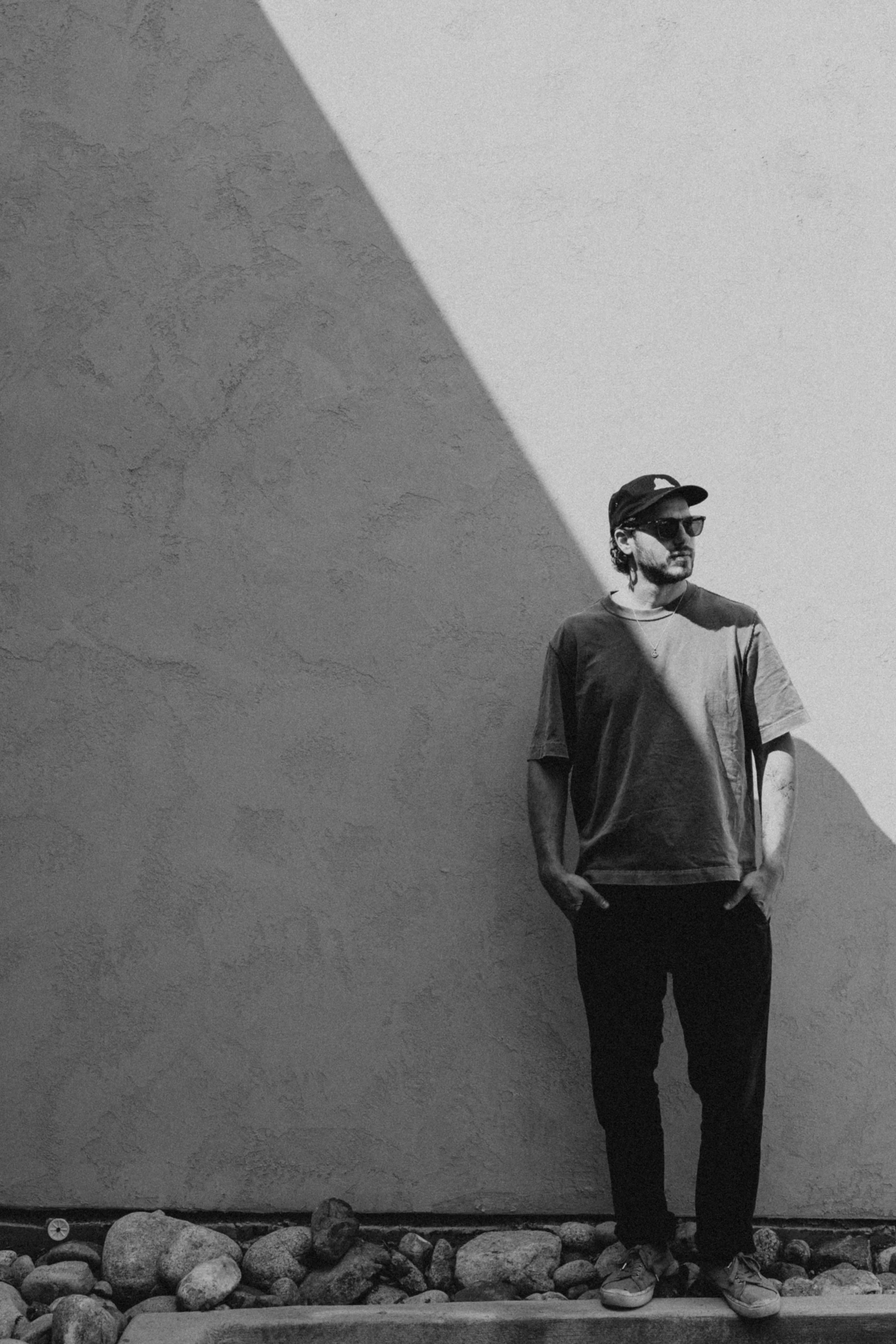
Matt Jalbert has spent most of his life expressing himself through a guitar. On Somebody’s Child, he decided to try something different.
Jalbert co-founded TAUK, logged the miles, played the rooms, built the reputation — instrumental, adventurous, no vocals required. In 2025 he put out Sauce Buffet, his solo debut — still instrumental, still no singing. Then something shifted. He started sitting with an acoustic and relearning songs he loved, chasing something simpler.
"What makes a good song?" he says. "I started paying attention to that instead of the guitar part."
Somebody's Child is the answer — the first batch of songs Jalbert has written with lyrics, and the first time he's the one singing them. The rule was simple: if it can't hold up on just voice and acoustic guitar, it doesn't belong on the record.
"Everything else is extra," he says.
That idea quietly shaped every decision on Somebody’s Child. The guitar, despite being the instrument that introduced him to most listeners, rarely demands the spotlight. Solos appear because they belong there, not because they’re expected. Parts are left rough around the edges. First takes stay. Mistakes survive. “The guitar is just a tool,” Jalbert says.
Recorded at Tone Town—a warm, lived-in studio tucked into a house in California’s San Fernando Valley—Somebody’s Child was built more like friends hanging out than musicians chasing perfection. Jalbert teamed up with duo behind Tone Town - longtime friend Devin Runco, who has spent years behind the soundboard with TAUK, and producer/drummer Curtis Kelley, whose creative energy became one of the engines behind the record. Together they stripped away the temptation to overproduce.
“We kept saying, ‘Let’s just make a cool record that we all really like. Don’t make something that sucks.’”
Most of the album was tracked live as a trio: Jalbert on guitar, Runco on bass, Kelley on drums. Jalbert even abandoned the plan to rerecord many of his guitar parts after realizing the first takes already had everything they needed.
“I thought we’d fix everything later,” he says. “But later never came. The takes already had the thing.”
That philosophy extends beyond the recording process. After spending years developing the technical vocabulary that comes with jazz school and instrumental music, Jalbert found himself becoming less interested in impressing people and more interested in making songs they wanted to come back to.
“It’s not important if a guitar part is hard,” he says. “Does the song make somebody want to hear it again?”
Those songs pull from everywhere that shaped him. The bluesy swagger of White Denim. The left turns of Beck. The restless creativity of King Gizzard. The melodic instincts of Wilco. The weirdness of Cake. Radiohead’s sense of atmosphere. And, whether he intended it or not, the unmistakable imprint of growing up in the 1990s, when artists like Beck, Sublime, Nirvana, Dave Matthews Band, the Red Hot Chili Peppers, and 311 seemed to drift through every car stereo and living room.
“I’m realizing how much of a ‘90s kid I actually am,” he says. “I don’t even mean to write that way. It’s just somewhere in me.”
The album’s title arrived almost accidentally. Somebody’s Child was the first song Jalbert ever finished writing with lyrics, and its central phrase stayed with him because of its simplicity. No matter who we become, we’re all somebody’s child. We’re all part of a story that started long before we got here. And we’re all learning as we go.
That perspective runs quietly beneath the entire record. The songs wrestle with impostor syndrome, identity, relationships, uncertainty, and the strange business of trying to find your place in the world. They’re personal without becoming confessional, thoughtful without losing their sense of humor. Jalbert is less interested in offering answers than reminding himself—and everyone listening—not to miss the life that’s already happening.
“You can spend your whole life chasing the next thing,” he says. “It’s important to stop and appreciate what you already have.”
For all the new territory Somebody’s Child explores, Jalbert doesn’t see it as leaving anything behind. His years with TAUK prepared him for this in countless ways: learning how to trust collaborators, when to push an idea forward, when to get out of its way, and how to build something bigger than yourself. This project simply asked different questions.
The biggest surprise?
“I realized I actually love to sing.”
That’s fitting, because Somebody’s Child is ultimately a record about rediscovering the excitement of not knowing exactly what you’re doing. About following curiosity instead of expectations. About letting songs breathe. About remembering that making music is supposed to be fun.
Or, as Jalbert puts it: “Good rock and roll should take everything about being alive—the love, the frustration, the weirdness of it all—and just say, ‘Fuck it. Let’s have fun.’”